
Data Is Power: Learnings from NABE

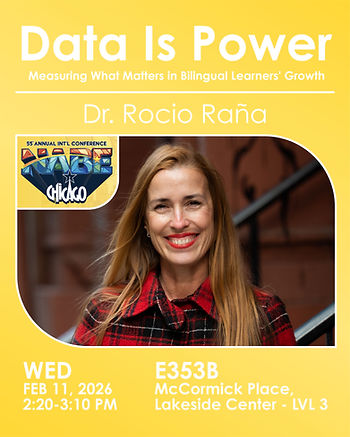
Last week at the 55th Annual Conference of the National Association for Bilingual Education (NABE), I had the opportunity to present a session titled “Data Is Power: Measuring What Matters in Bilingual Learners’ Growth.”
The room was filled with educators, administrators, and advocates who all shared a common reality: we are surrounded by data, but not all data is useful.
I began the session with three simple questions:
How many of you feel overwhelmed by the amount of student data you receive?
How many feel that the data actually helps you change instruction?
How many feel the data helps you defend your dual language program?
Hands went up for the first question. Fewer hands for the second. Even fewer for the third.
That’s the problem.
Not All Data Is Created Equal (and yes, data CAN lie!)
Approximately 25% of school-age children in the United States speak a language other than English at home. Yet most literacy assessments at our schools are monolingual and designed for idealized, monolingual English speakers. When bilingual students are assessed with monolingual tools, we often capture only part of their abilities. When they underperform on those tools, we respond with more English-only interventions, rather than leveraging their full linguistic abilities to move them forward.
In the short term, the lack of adequate data leads to uninformed instructional decisions and puts effective programs at risk. In the long term, it contributes to higher dropout rates and reduced academic and economic opportunities for bilingual and multilingual children.
At NABE, we focused on a key distinction:
Teachers need data that helps them support students’ literacy development in the classroom, while administrators need data that demonstrates student growth and program success. These goals are connected but they require different lenses.
What Data Matters for Teachers?
Teachers need data that is:
Skill-specific
Asset-based
Bilingual
Actionable
At the conference, I presented a case study conducted at two 50–50 dual language schools serving 240 Kindergarten students, we assessed listening comprehension, speaking, and pre-literacy skills in both English and Spanish three times across the school year. From Beginning of Year (BOY) to End of Year (EOY), students demonstrated meaningful growth in all areas measured:
English Growth
Listening: +13%
Pre-literacy: +15%
Speaking: +22%
Spanish Growth
Listening: +17%
Pre-literacy: +22%
Speaking: +21%
We also assessed key sub-skills that play a role in early literacy development. When teachers can see more detailed growth data, in areas such as phonological awareness, vocabulary, and letter knowledge, they can adjust instruction with precision to have a significant impact on their students’ progress. For example, Spanish Tier 1 vocabulary grew by 24% throughout the year, and letter knowledge in English increased by 20%.
That is what actionable data can achieve. That is instructional power.
What Data Matters for Administrators?
Administrators need data that is:
Benchmark-aligned
Standards-aligned
Growth-focused
In our case study, students met English grade-level benchmarks for the beginning of the year, though some skills were near the lower end of the "meeting" benchmark. In Spanish, certain areas were below benchmark at the beginning of the school year.
By the end of the year 100% of grade-level benchmarks were met in both English and Spanish.
This is the type of data that allows districts to say:
Our dual language program works.
Students are not “trading one language for another.”
Bilingualism strengthens literacy, it does not hinder it.
In fact, students developed language and pre-literacy skills in both languages and met all key grade level literacy standards measured.
That is program validation.
The Deeper Lesson
At the end of the session, we reflected on one core idea:
Purpose-driven data is power.
For bilingual learners, the data that matters must be:
Asset-based
Bilingual
Actionable
Pedagogically and politically defensible
When we measure what truly matters, we empower teachers to refine instruction, we equip administrators with the tools needed to gain support for programs, and we ensure that bilingual children are seen for their full capabilities.
The energy at NABE reminded me of something powerful: educators are ready for better tools. They are ready for data that reflects the reality of bilingual and biliteracy development. Plus, when we get the measurement right, we protect the future of bilingual education.


Comments